Building a Minimum Viable Product (MVP) has undergone a radical transformation. In the past, launching a functional application required months of manual coding, significant capital investment, and a specialized team of engineers. Today, AI-powered platforms like Lovable are collapsing that timeline from months to days. However, as the barrier to entry lowers, the gap between a 'toy app' and a 'production-ready MVP' has widened. To succeed in today's competitive landscape, you cannot simply generate a UI; you must architect a scalable, maintainable, and secure digital product.
At Rethink Lab, we specialize in helping founders navigate this transition. Whether you are seeking MVP development to test a hypothesis or looking to rapidly iterate on a validated idea, understanding the nuances of AI-driven development is crucial. This guide provides a deep dive into using Lovable to build a production MVP that doesn't just look good in a demo but functions reliably for real users.
The Shift from Traditional to AI-Accelerated Development
The traditional development lifecycle is often linear and document-heavy. It begins with extensive requirements gathering, moves into high-fidelity design, and eventually lands in the hands of developers who spend weeks writing boilerplate code. While this method ensures control, it is often too slow for the modern startup world.
AI-powered development tools like Lovable (and its underlying technologies like GPT-4o and Claude 3.5 Sonnet) change the starting point. Instead of starting with a blank index.js, you start with a functional interface generated from natural language prompts.
Why Lovable is Different
Many no-code builders lock you into proprietary ecosystems, making it nearly impossible to export code or customize deep logic. Lovable takes a 'low-code, high-output' approach. It generates clean, human-readable code—typically using the Vite, React, Tailwind CSS, and Shadcn UI stack—allowing for seamless transition into professional development environments if needed. This makes it a perfect bridge for founders who might later need technical co-founder level oversight to scale their infrastructure.
The Importance of Production Mindset
A production-ready MVP is defined by four pillars:
- Scalability — Can the database handle 10,000 users as easily as 10?
- Security — Is user data protected by industry-standard protocols?
- Maintainability — Can another developer understand the code six months from now?
- Reliability — Does the app handle edge cases and errors gracefully?
Setting these foundations early prevents the 'technical debt trap' that kills many early-stage startups.
Section 1: Strategic Planning and Product Discovery
Before you write a single prompt in Lovable, you must define exactly what you are building. Jumping straight into generation without a plan often leads to 'feature creep' and a disjointed user experience. This is where product discovery becomes your most valuable phase.
Defining Your Core Value Proposition
Your MVP should solve one problem exceptionally well. If you are building a SaaS platform for property managers, is your 'killer feature' automated rent collection or maintenance scheduling? Trying to do both at launch dilutes your focus.
Pro Tip
Use the 'Jobs to be Done' framework to identify the core task your user is trying to accomplish. Your MVP should be the fastest path to completing that task.
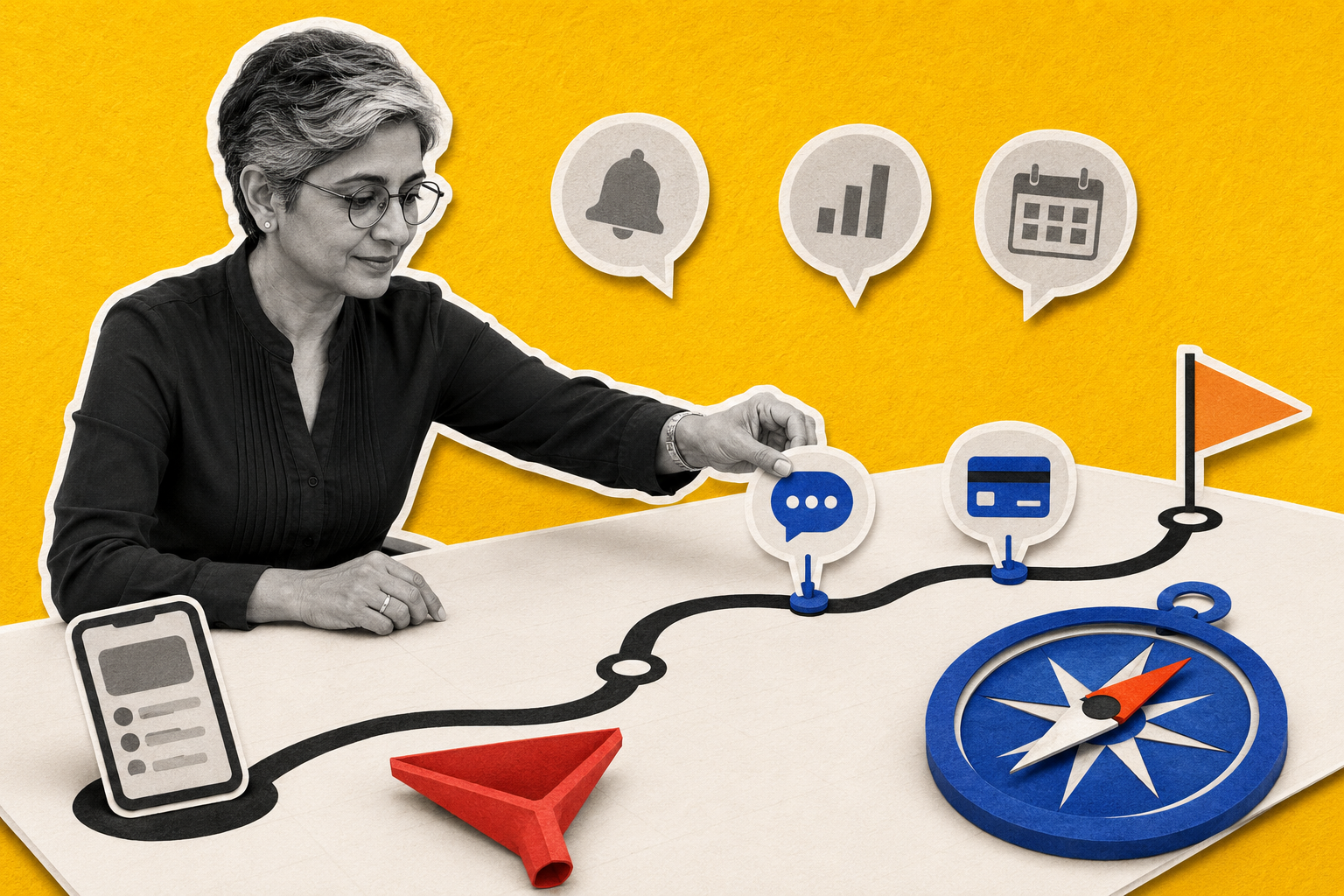
Mapping the User Journey
Document the 'Happy Path'—the ideal sequence of steps a user takes to find value. For a Lovable-built app, mapping this out helps you structure your prompts. If the path involves a dashboard, a profile settings page, and a checkout flow, those are your primary architectural components.
| Phase | Goal | Lovable Requirement |
|---|---|---|
| Discovery | Validate the problem | List of must-have features |
| Strategy | Define the USP | Branding and tone guidelines |
| Prototyping | Visualize the UI | Page structure and data flow |
| Development | Build functional logic | Backend integrations (Supabase/Firebase) |
Section 2: Setting Up Your Production Environment
To move beyond a simple prototype, you need an environment that supports authentication, data persistence, and hosting. Lovable integrates beautifully with Supabase, an open-source Firebase alternative that provides a managed PostgreSQL database.
Why Supabase?
Supabase is the backbone of most production-level Lovable apps. It offers:
- PostgreSQL Database — A robust, relational database used by enterprises worldwide.
- Authentication — Built-in support for social logins (Google, GitHub) and email/password.
- Storage — For user-uploaded images, PDFs, and videos.
- Edge Functions — For running server-side code without managing servers.
Integrating with Lovable
When you start a project in Lovable, the first step is often connecting your Supabase project. This allows Lovable to 'read' your database schema and write code that interacts with your data in real-time. This is where rapid development truly shines—instead of manually creating APIs, Lovable can generate the CRUD (Create, Read, Update, Delete) logic automatically based on your table structure.
Section 3: Architecting the UI with Prompt Engineering
Working with Lovable is an iterative conversation. You aren't just giving an order; you are collaborating with an AI architect. To get production-quality results, your prompts need to be specific, structural, and aesthetic.
The Anatomy of a High-Quality Prompt
Avoid vague requests like "Make a nice dashboard." Instead, use structured prompts:
Create a dashboard for a subscription-based analytics platform.
- Use a sidebar navigation with links to 'Overview', 'Reports', and 'Settings'.
- The 'Overview' should feature a grid of 4 metric cards (Revenue, Users, Churn, ARPU).
- Use Shadcn UI components for the cards and charts.
- Ensure the layout is responsive and follows a clean, minimalist professional aesthetic.
- Use a primary color of Slate-900 and an accent of Indigo-600.
Component-Driven Design
One of the strengths of Lovable is its use of modern UI libraries like Shadcn and Tailwind. This ensures that your app isn't just a giant block of code, but a modular system of reusable components. This is the same philosophy we use in our UX/UI design services to ensure scalability.
- Typography — Set clear hierarchies with standard tailwind classes.
- Spacing — Ensure consistent padding and margins (e.g.,
p-4,m-2) to avoid a cluttered UI. - Accessibility — AI is getting better at accessibility, but always verify that your buttons have labels and your images have alt text.
Section 4: Deep Data Logic and Backend Integration
A pretty UI is just a facade. For a production MVP, you need 'state management' and 'data fetching.' If a user updates their profile, that change must reflect across the app and persist in the database.
Managing State in React
Lovable typically uses React hooks like useState and useEffect. For more complex applications, you might prompt it to use TanStack Query (React Query). According to research by Stack Overflow, React remains the most popular web framework, ensuring that the code Lovable produces is easy to hand off to future developers.
Implementing Business Logic
Sometimes, your app needs to do more than just display data. It needs to calculate things, filter results, or trigger automation. For example, if you are building an AI-powered tool, you might need AI prototyping capabilities integrated directly into your workflow.
Security Note
Never handle sensitive business logic or private API keys solely on the client side. Use Supabase Edge Functions or a secure backend to process sensitive operations.
Section 5: Authentication and User Management
Security is non-negotiable for a production app. Users expect their data to be private. Lovable makes implementing authentication straightforward by leveraging Supabase Auth.
Implementing Protected Routes
You don't want unauthorized users accessing your 'Admin' panel. You must instruct Lovable to create 'Protected Routes' that check for an active user session before rendering content.
User Profiles and Permissions
A production-ready app usually has different user roles (e.g., Guest, Member, Admin).
- Profiles Table — Store user-specific data like avatars and bios.
- RLS (Row Level Security) — This is a critical feature of Supabase. It allows you to define rules directly in the database so that User A can never see User B's data, even if they somehow bypass the UI logic.
Section 6: Third-Party Integrations and APIs
No MVP is an island. To provide real value, your app will likely need to talk to other services. This is where workflow automation and AI automation integrate with your core product.
Payment Processing with Stripe
If you want to make money, you need Stripe. Lovable can scaffold out the checkout buttons, but you will need to handle the 'Webhooks'—the signals Stripe sends back to your app saying "Yes, this person paid."
AI Capabilities via OpenAI/Anthropic
Since Lovable builds in a modern JavaScript environment, integrating AI is as simple as adding an API call to OpenAI. You can build features like:
- Content generation
- Semantic search
- Predictive analytics
Section 7: Testing and Quality Assurance
Before you ship, you must break your app. High-velocity development often introduces bugs that a standard 'test run' might miss. Professional production environments require a rigorous UX audit and functional testing.
The Testing Checklist
- Mobile Responsiveness — Does the app work on an iPhone 13 as well as a 27-inch monitor?
- Form Validation — What happens if a user enters an invalid email? Does the app crash or show a helpful error?
- Loading States — Users hate a blank screen. Ensure there are 'skeleton loaders' or spinning icons while data is fetching.
- Edge Cases — What happens if the database is empty? What if the user loses internet connection?
Insight
According to Gartner, poor user experience is a leading cause of churn in SaaS startups. Investing in QA early saves thousands in lost customers later.
Section 8: Deployment and Launch Strategy
Your app is built. It's connected to a database. It's tested. Now, it needs to live on the web. Lovable provides integration with platforms like Netlify and Vercel for one-click deployments.
Custom Domains and SSL
Using a generic .netlify.app domain is fine for testing, but a production MVP needs a custom domain (e.g., app.yourstartup.com). Modern hosting providers offer free SSL certificates (HTTPS), which are essential for security and SEO.
Performance Optimization
A slow app is a dead app. Optimize your assets by:
- Compressing images
- Using lazy-loading for heavy components
- Minifying your CSS and JS files (usually handled automatically by Vite during the build process)
Section 9: Post-Launch Iteration and Scaling
The launch of your MVP is not the finish line; it is the starting line. Once real users start interacting with your product, you will receive data that contradicts your assumptions. This is when the real work begins.
Monitoring and Analytics
Integrate tools like PostHog or Google Analytics to track user behavior.
- Where are users dropping off?
- Which features are they using the most?
- Are there any recurring errors in the console?
Transitioning to a Full-Scale Product
As your user base grows, you might find that the AI-generated code needs refactoring for better performance. This is a natural progression. Many founders start with an AI-built MVP and eventually hire a team for IT outsourcing & team-as-a-service to handle the heavy lifting of enterprise-grade scaling.
Section 10: Common Pitfalls to Avoid
Even with the power of Lovable, it is easy to make mistakes that jeopardize your product's success.
- Over-Prompting — Trying to build 10 features at once. AI works best when you build incrementally.
- Ignoring Documentation — Lovable generates code based on standard libraries. Knowing how Shadcn or Tailwind work allows you to fix small UI bugs manually without fighting the AI.
- Lack of Backup — Always connect your project to a GitHub repository. This provides version control, allowing you to 'undo' a prompt that breaks your app.
- Neglecting SEO — If your MVP is a public-facing site (like a directory or blog), ensure you have proper meta tags and semantic HTML. Our web redesign experts often see brilliant apps that simply cannot be found on Google because they lacked basic SEO optimization.
Case Study: From Idea to Production in 72 Hours
Imagine a founder who needs a specialized CRM for niche medical recruiters.
Day 1: Design and Data Schema
Using Lovable, they describe the data structure: Candidates, Clients, and Placements. They link it to Supabase and instantly have a database ready to store HIPAA-compliant (simulated) data.
Day 2: Feature Implementation
They prompt the AI to build a 'Drag and Drop' recruitment pipeline. Using the dnd-kit library, Lovable generates the interactive UI. They integrate SendGrid for automated email notifications.
Day 3: Refinement and Launch
They perform a web design pass to ensure the branding matches their target market. They deploy to Vercel, connect a custom domain, and send the link to their first five beta testers.
This speed is only possible when you combine powerful AI tools with a structured, professional methodology.
Conclusion: The Future of Production MVPs
The era of spending $50,000 and six months just to test a basic app idea is over. Tools like Lovable have democratized the ability to build, but they have also raised the bar for quality. To stand out, your MVP must be more than a 'prototype'; it must be a professional-grade tool built on solid architectural principles.
At Rethink Lab, we believe in the power of 'Rethinking' how products are made. By combining consulting & mentorship with state-of-the-art AI development techniques, we help you bridge the gap between imagination and a live, profitable product.
Ready to turn your vision into a production-ready reality? Get in touch with our team today, or explore our pricing to find the right path for your startup journey. Whether you need a simple web app development or a complex mobile app development solution, we have the expertise to guide you every step of the way.
Additional Resources:
- The Lean Startup Methodology - Harvard Business Review
- Modern Web Development Best Practices - MDN Web Docs
- State of the Cloud Report - Bessemer Venture Partners