In the hyper-competitive world of startups and corporate innovation, speed is the only sustainable competitive advantage. The traditional method of spending six months and hundreds of thousands of dollars to build a Minimum Viable Product (MVP) is increasingly becoming a relic of the past. Today, the goal is to visualize, test, and validate ideas before a single line of production code is written. This is where rapid prototyping serves as the ultimate bridge between a visionary concept and a market-ready reality.
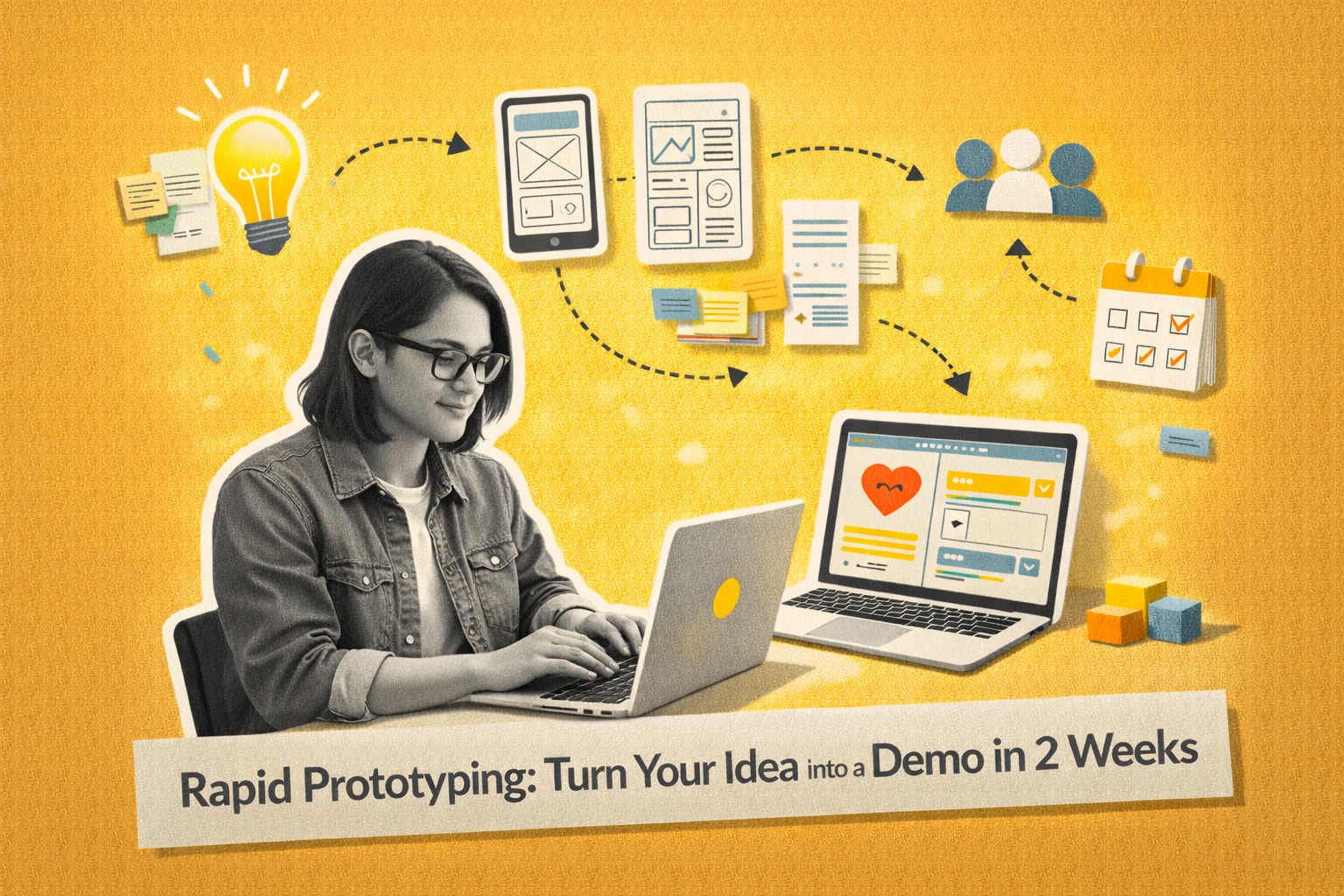
At Rethink Lab, we have refined a methodology that allows founders and product leaders to transition from a 'napkin sketch' to a high-fidelity, interactive demo in just 14 days. By leveraging the latest advancements in AI-driven development and low-code ecosystems, we empower teams to secure investor funding, gain internal stakeholder buy-in, and gather critical user feedback with unprecedented speed. This guide explores the mechanics of rapid prototyping, the tools that are changing the game, and the strategic framework you need to accelerate your product journey.
The Strategic Importance of Rapid Prototyping in 2026
Why is everyone talking about prototyping now? The answer lies in the increasing difficulty of capturing market attention and capital. Investors are no longer moved by pitch decks alone; they want to see the product experience. They want to feel the UI, understand the user flow, and see evidence of technical feasibility. Rapid prototyping isn't just about 'making things look pretty'—it's about risk mitigation.
By engaging in product discovery, teams can identify potential pitfalls early. According to research by Gartner, organizations that prioritize iterative prototyping are 3x more likely to deliver products that meet customer needs on the first release. Prototyping allows you to fail fast and fail cheap. If an idea isn't going to work, it's better to find out in week two than in month six after burning through your seed round.
Building for Buy-in
Whether it’s a venture capitalist or a corporate board, stakeholders need to see a tangible manifestation of your vision. A prototype provides a 'north star' for the entire organization, aligning design, engineering, and marketing teams toward a unified goal.
Validation Without Occupation
One of the biggest mistakes startups make is occupying their entire engineering team with building features that haven't been validated. Rapid prototyping allows you to test hypotheses in parallel with core development, ensuring your roadmap is driven by data rather than assumptions.
Pro Tip
Don't aim for perfection in a prototype. Aim for 'functional enough' to tell the story. The goal is to elicit a reaction, not to build a scalable infrastructure.
The Traditional MVP vs. The AI-Enhanced Prototype
Historically, the path to an MVP involved several months of design sprints followed by months of back-end and front-end development. This siloed approach often led to 'feature creep' and bloated budgets. Today, the rise of AI prototyping has collapsed these timelines.
| Feature | Traditional MVP | Rapid AI Prototype |
|---|---|---|
| Time to Market | 3–6 Months | 1–2 Weeks |
| Cost Basis | High (Engineers + Designers) | Low (AI-Assisted Workflows) |
| Flexibility | Hard to pivot once coded | Incremental changes in minutes |
| Primary Goal | Initial Market Launch | Validation & Fundraising |
The shift is towards 'Low-Code/No-Code' tools enhanced by Generative AI. This doesn't mean the quality is lower; in fact, the high-fidelity outputs from modern tools often look more polished than early-stage custom code. By focusing on rapid development, companies can iterate ten times in the time it used to take to iterate once.
Week 1: From Concept to Wireframe and Logic
The first week of our two-week sprint is dedicated to defining the 'Core Loop' of your product. If your app does ten things, we identify the one thing it must do perfectly to provide value. This is the foundation of effective product strategy.
Day 1-2: Discovery and User Flow Mapping
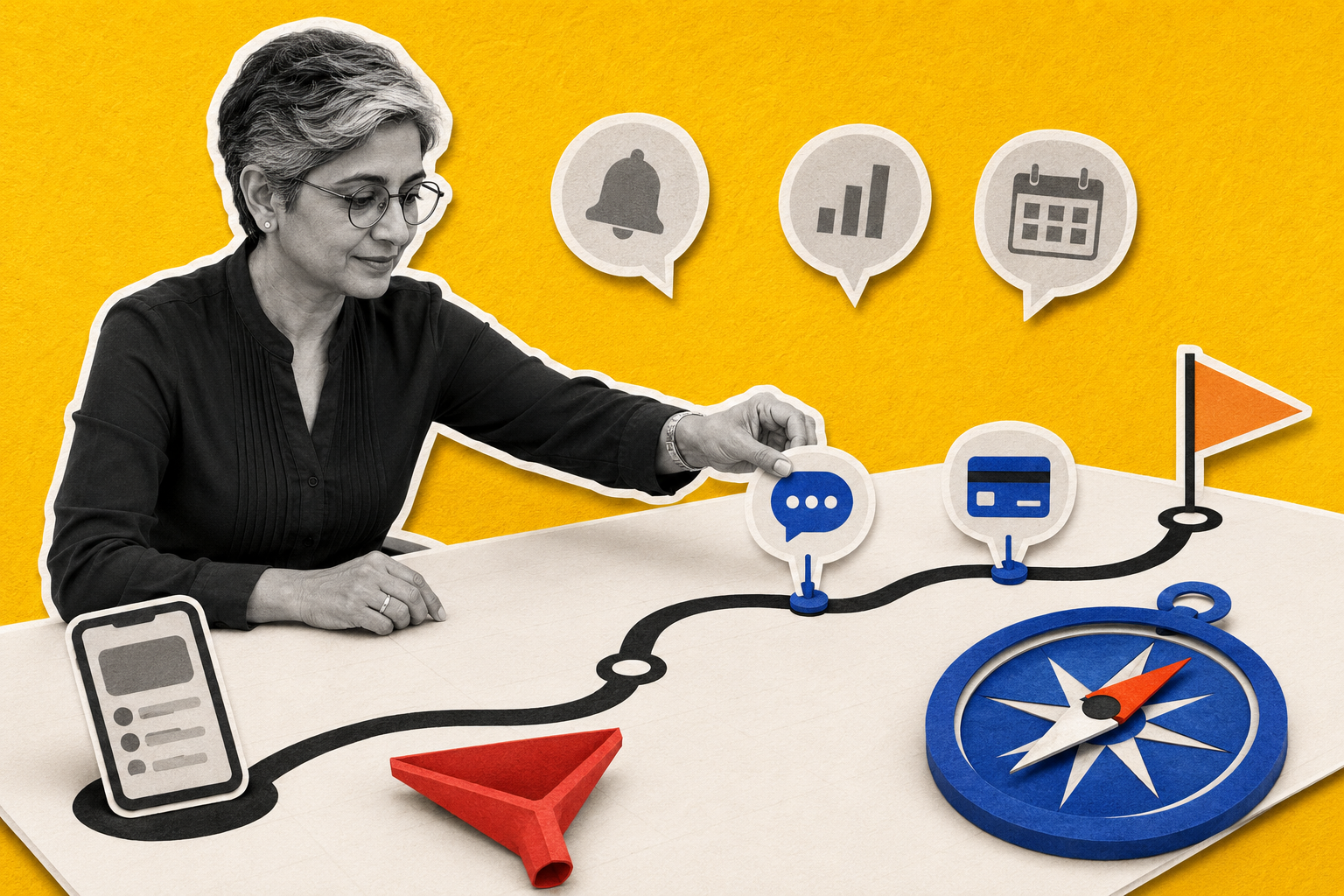
Everything starts with the user. We map out the 'Happy Path'—the sequence of actions a user takes to reach the 'Aha!' moment. During this phase, we utilize tools like FigJam or Miro to visualize the architecture. This isn't just about screens; it's about the logic. What happens when the user clicks 'submit'? How does the AI process the input?
Day 3-4: Low-Fidelity Wireframing
Before we touch high-end UI, we build the skeleton. This ensures the UX is intuitive. If a user can't navigate a black-and-white wireframe, adding colors and icons won't help. This is where a UX audit mindset is applied, even in the early stages, to ensure we aren't building friction into the design.
Day 5: Tool Selection and Tech Stack Alignment
This is a critical junction. For web-based platforms, we often leverage Lovable, an AI-powered full-stack engineer that can turn natural language and designs into functional React code. For mobile-centric ideas, we utilize Bolt, which allows for lightning-fast iteration of mobile app layouts and logic. The choice depends entirely on where your user lives.
Info
The 'Core Loop' is the repetitive cycle of activities a user engages in. For Instagram, it's: Open -> Scroll -> Like/Comment. For your prototype, identify this loop first.
Week 2: High-Fidelity Design and Functional Implementation
Week two is where the magic happens. We move from static blueprints to interactive experiences. This is where our expertise in UX/UI design transforms into a living product.
Leveraging Lovable for Web Prototypes
Lovable is a game-changer for web applications. It allows us to describe complex components and have them generated in real-time. This isn't just 'dummy data'; we can integrate actual APIs and databases (like Supabase) to make the prototype feel like a finished product.
- Real Components — We Use Tailwind CSS and Shadcn UI to ensure the code is clean and modern.
- State Management — Lovable handles the complex logic of how data moves through your app.
- Instant Deployment — We can share a live URL with you and your investors by the end of the day.
Utilizing Bolt for Mobile Excellence
When the product is mobile-first, Bolt is our tool of choice. It bridges the gap between design and interactive code, allowing us to simulate mobile gestures, camera integrations, and push notification flows. This is essential for mobile app development validation, as feel and responsiveness are everything on a handheld device.
Integrating AI Capabilities
Most modern prototypes require some level of AI—whether it’s a chatbot, a recommendation engine, or automated content generation. During week two, we integrate AI automation scripts to show the 'intelligence' of the product. Using tools like OpenAI's API or LangChain, we make your prototype think, respond, and provide real value during the demo.
Why Most Prototyping Projects Fail (and How to Avoid It)
Despite the tools available, many prototypes fail to achieve their goal. Usually, this is because the team loses sight of the objective. A prototype is a communication tool, not a production environment.
Mistake 1: Perfectionism over Progress
Trying to fix every pixel or handle every edge case in a 2-week sprint is a recipe for disaster. Focus on the 80/20 rule: 80% of the value comes from 20% of the features. If you are struggling with this balance, our consulting & mentorship can help guide your prioritization.
Mistake 2: Ignoring the Backend Reality
A prototype that promises 'magic' without a technical path to reality is a lie. As a technical co-founder partner, we ensure that while the prototype is built fast, it is based on a feasible technical architecture. We won't show a feature that can't actually be built at scale later.
Mistake 3: Zero User Testing
Building a prototype in a vacuum is dangerous. You need to get it in front of at least 5 potential users. According to NN/g (Nielsen Norman Group), testing with 5 users uncovers 85% of usability issues. Spend part of the second week watching people struggle with your prototype. It’s a humbling but necessary experience.
Case Study: From Idea to $500k Seed Round in 14 Days
Let's look at a real-world scenario. A Fintech founder came to us with an idea for an AI-driven wealth management tool for Gen Z. They had a pitch deck but were getting 'maybe' from every VC they met. The VCs couldn't visualize how the AI would actually categorize spending and offer advice in a way that wasn't annoying.
- The Plan — We decided to build a high-fidelity web app using Lovable.
- The Execution — In week one, we mapped the dashboard and the 'AI Advisor' chat interface. In week two, we hooked up a mock Plaid integration to show real-time transaction updates. We added a layer of GPT-4 to provide actual financial insights based on the mock data.
- The Result — The founder stopped using a PDF deck and started the next meeting by handing the VC an iPad with the live prototype. They secured a $500k seed check within three days of that meeting.
This is the power of showing vs. telling. When an investor can play with the product, the conversation shifts from 'Could this work?' to 'How fast can we scale this?'
The Role of Low-Code and No-Code in Scaling
A common question we get is: 'Do I have to throw this prototype away when I start real development?' The answer is: Not necessarily.
Modern tools like those we use for web app development often produce clean, exportable code. While the prototype serves as a validation tool, the underlying logic and design systems can often be migrated to a production-grade environment. This 'hybrid' approach significantly reduces the time to launch an actual MVP.
The Efficiency of Integrated Teams
By using an IT outsourcing team-as-a-service, you gain access to designers who understand code and developers who understand UX. This cross-functional synergy is what makes 2-week turnarounds possible. You aren't playing 'telephone' between different departments.
Workflow Automation
Even during the prototyping phase, we look for ways to implement workflow automation. If your business process involves manual data entry, we prototype the automated version. This demonstrates operational efficiency to internal stakeholders who may be worried about the overhead of a new product.
Designing for Emotion: The 'High Fidelity' Edge
There is a psychological difference between seeing a gray box and seeing a beautifully rendered interface with real imagery and smooth transitions. This is often referred to as the 'Aesthetic-Usability Effect'—a phenomenon where users perceive more attractive products as more usable.
When we perform a web redesign or a new web design project, we focus on:
- Micro-interactions — The small animations when a button is clicked or a card is swiped. These make the app feel alive.
- Consistent Typography — Ensuring the brand feels established and trustworthy.
- Data Visualization — Turning boring numbers into interactive charts that tell a story.
In a 2-week sprint, we don't have time to design 50 screens, but we can design the 5 most important screens to such a high standard that they look indistinguishable from a finished product from Apple or Google.
Warning
High-fidelity prototypes can sometimes lead stakeholders to believe the product is 100% finished. Always manage expectations by clearly stating what is 'hard-coded' vs. 'dynamic' logic.
Preparing for Your Rapid Prototype Sprint
If you're ready to turn your idea into a demo, you need to come prepared. At Rethink Lab, we help you through this, but having these items ready will accelerate the process:
- Defined User Personas — Who are we building for? What are their pain points?
- The One-Sentence Value Prop — What is the primary problem this prototype solves?
- Brand Assets — Even just a logo and a color palette help in giving the prototype an identity.
- Sample Data — AI needs context. Having a spreadsheet of 'realistic' data helps us populate the prototype so it feels authentic.
Post-Prototype: What Comes Next?
Once the 2 weeks are up, you have a powerful asset. Your next steps typically involve:
- Investor Meetings — Use the prototype as your primary pitch tool.
- User Interviews — Conduct formal usability testing to refine the roadmap.
- Engineering Handover — Use the prototype as the 'spec' for your full-scale development team.
Conclusion: The Future of Product Creation
The barrier to entry for building world-class software has never been lower, yet the bar for quality has never been higher. You cannot afford to spend months in a development 'black hole' hoping that the market will like what you've built.
Rapid prototyping with Rethink Lab is about more than just speed; it's about clarity. It's about taking the fuzzy, abstract ideas in your head and giving them a physical form that can be poked, prodded, and improved. Whether you need an AI prototyping partner to explore the frontier of LLMs, or a team to handle your MVP development from end to end, the journey starts with those first 14 days.
Ready to see your idea in action? Get in touch with Rethink Lab today and let’s build your demo in two weeks. Explore our pricing to find a model that fits your startup’s stage, or view our portfolio to see how we’ve helped others move from concept to capital.
Don't let your idea remain an idea. Let the world see it, touch it, and fund it.