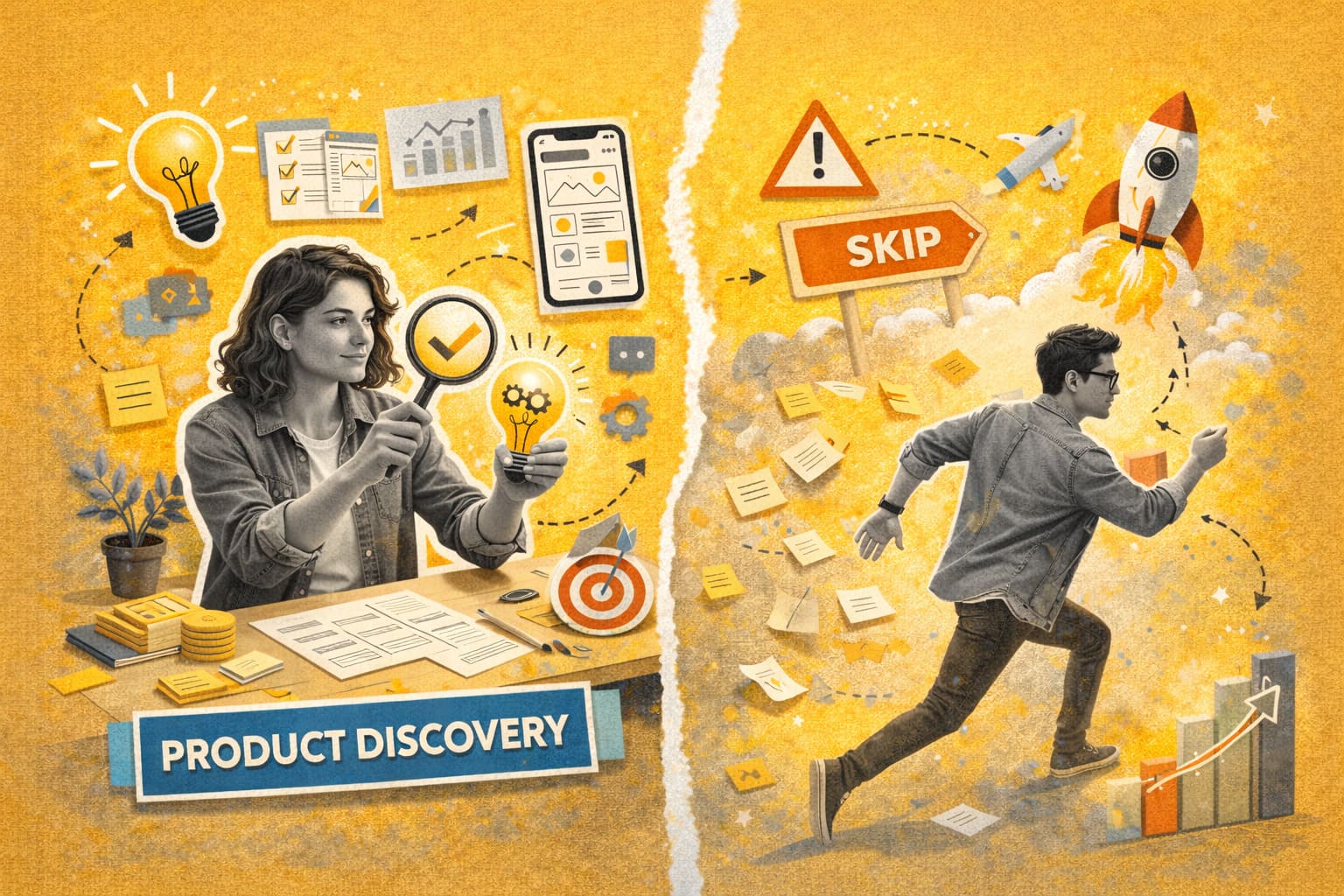
In the high-stakes world of technology, the bridge between a brilliant idea and a successful market disruption is often built during a phase that many founders overlook: product discovery. We often see entrepreneurs racing to write code, hire engineers, and launch a beta version before they have truly validated the core problem they are solving. This rush to build is the primary reason why 90% of startups fail within their first few years. At Rethink Lab, we believe that understanding the 'why' is just as important as the 'how,' and that is where deep discovery comes into play.
Product discovery is a systematic process used by product teams to decide what to build. It is the phase where you reduce uncertainty and ensure that you aren’t just building the product right, but that you are building the right product. By investing in product discovery early on, you align your vision with actual market needs, technical feasibility, and business goals.
The Fundamental Pillars of the Product Discovery Process
To understand why this phase is so critical, we must break down what actually happens during discovery. It isn’t just a brainstorming session; it is a rigorous, data-driven framework that transforms assumptions into validated insights. A comprehensive discovery phase typically encompasses four major pillars: problem definition, user flow architecture, feature mapping, and technical planning.
1. Problem Definition: Finding the North Star
Every great product starts with a problem, not a feature. However, many founders fall in love with their solution before they fully understand the pain point. Problem definition involves peeling back the layers of a user's frustration to find the root cause.
During this stage, we ask questions like:
- What specific task is the user trying to accomplish?
- What are the current workarounds they use?
- Why are these workarounds insufficient?
- Is this a 'need-to-have' or a 'nice-to-have' solution?
If you skip this, you risk building a Vitamin (optional) rather than a Painkiller (essential). A clear product strategy and roadmapping session can help crystalize this definition before a single line of code is written.
2. User Flows and Experience Mapping
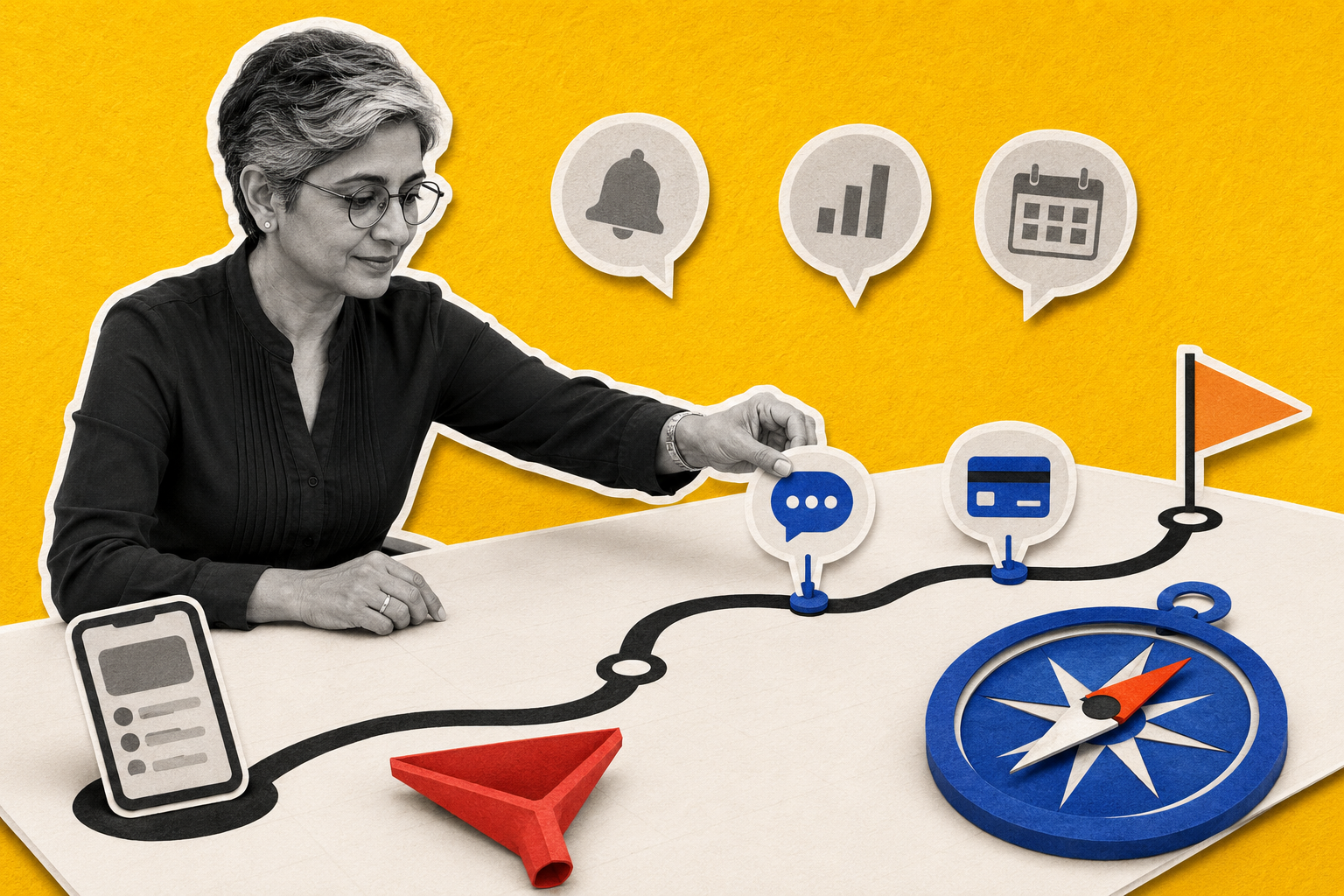
Once the problem is defined, we look at how the user moves through the solution. This is where we map out the 'User Journey.' We identify every touchpoint, from the moment a user hears about the product to the moment they achieve their goal.
- Entry Points — How do they discover the tool?
- Onboarding — How quickly can they see value (Time to Value)?
- Primary Actions — What is the core loop of the application?
- Retention Hooks — What brings them back?
Mapping these flows helps identify friction points early. If a user has to click six times to perform a basic task, the product will struggle with retention. High-quality UX/UI design is born from these flows, ensuring the interface is intuitive and serves the journey.
3. Feature Mapping and Prioritization
One of the biggest traps in product development is 'feature creep.' This occurs when a team adds more and more functionality in the hopes of making the product more appealing, only to end up with a bloated, confusing mess.
During discovery, we use frameworks like the MoSCoW method (Must-have, Should-have, Could-have, Won't-have) to prioritize features based on user value and development effort. This leads to a lean MVP development plan that focuses on the 20% of features that will provide 80% of the value.
4. Technical Planning and Feasibility
Finally, we look at the 'how.' Can we actually build this? Does it require complex AI automation or can it be handled with standard database architecture? Technical planning involves choosing the right tech stack, scouting potential API integrations, and identifying technical risks. For many non-technical founders, having a technical co-founder or a CTO-as-a-Service during this phase prevents expensive architectural mistakes that could require a total rebuild later.
| Discovery Element | Focus Area | Output |
|---|---|---|
| Problem Definition | Market Alignment | Problem Statement & Value Prop |
| User Flows | User Experience | High-fidelity Wireframes |
| Feature Mapping | Scope Management | Product Backlog & Roadmap |
| Tech Planning | Scalability | Tech Stack & System Architecture |
Why Startups Systematically Skip Discovery
If discovery is so beneficial, why do so many teams bypass it? The reasons are usually a mix of psychological biases, external pressures, and a misunderstanding of what 'speed' actually looks like in software development.
The Illusion of Speed
Founders are often under immense pressure to show progress—to investors, to employees, and to themselves. In their minds, progress equals 'shipping code.' There is a dangerous misconception that time spent thinking is time wasted. However, building the wrong thing fast is the slowest way to succeed.
The Cost of Rushing
For every $1 spent fixing a problem during the discovery phase, it will cost $10 to fix during development and $100 to fix after the product has launched.
Overconfidence and Confirmation Bias
Many entrepreneurs have a 'visionary' mindset. While this is necessary for innovation, it can lead to confirmation bias—the tendency to look for information that supports their existing beliefs while ignoring data that contradicts them. They assume they already know what the user wants, so they view discovery as an unnecessary formality.
Budget Constraints
Startups operating on a shoe-string budget often feel they can't afford a discovery phase. They want every dollar to go toward the final build. Ironically, skipping discovery usually results in burned capital because the team ends up building features that nobody uses or having to pivot entirely after six months of development. A UX audit later down the line is often more expensive than doing the research correctly from the start.
The High Cost of the 'Build First' Mentality
When you skip product discovery, you aren't saving time; you are just deferring the discovery process to a later, more expensive date. Here is what happens when you jump straight into web app development without a plan:
1. High Development Waste
According to various industry studies, up to 50% of developer time is spent on rework that could have been avoided. Without a clear discovery phase, developers often receive vague requirements. They build what they think is intended, only for the founder to realize it doesn't solve the problem, leading to endless cycles of 'tear down and rebuild.'
2. Lack of Product-Market Fit
The number one reason startups fail is a lack of market need. If you haven't validated that people are willing to pay for your solution, you are essentially gambling with your investment. Discovery forces you to confront the market reality before you've spent your entire seed round.
3. Engineering Burnout
Developers want to build things that matter. When they are forced to pivot every two weeks because the 'strategy' changes on a whim, they lose motivation. A clear roadmap, established through consulting and mentorship, provides the stability your engineering team needs to perform at their best.
4. Terrible User Experience
A product built without discovery usually feels 'bolted together.' The navigation is non-linear, the features feel disconnected, and the value proposition is buried. Even if the backend is a masterpiece of mobile app development, a confusing UI will kill user adoption.
How to Build a Culture of Discovery
Adopting a discovery-first mindset requires a shift in company culture. It characterizes a move from a 'Feature Factory'—where success is measured by the number of features shipped—to an 'Outcome-Driven' organization—where success is measured by the problems solved for the user.
Implementing Constant Feedback Loops
Discovery shouldn't end when development begins. It should be a continuous cycle. Even while your team is engaged in rapid development, you should be gathering feedback on the existing modules.
- User Interviews — Speak to 5-10 users every week.
- Analytics — Track how users are interacting with your AI prototyping or early betas.
- A/B Testing — Test different versions of a feature to see which performs better.
The Role of Rapid Prototyping
You don't need a full-stack engineering team to test an idea. AI prototyping and low-code tools allow founders to put a clickable version of their product in front of users in days, not months. This 'smoke testing' is a vital part of the discovery process that provides the data needed to justify a full build.
Involving the Whole Team
Discovery isn't just for designers and product managers. Engineers should be involved in the discovery calls. When a developer hears a user describe their pain first-hand, they are better equipped to suggest innovative technical solutions that the founder might not have considered. This collaborative spirit is central to our it outsourcing team-as-a-service model.
Pro Tip
Create a 'Discovery Backlog' where you store ideas and assumptions that need testing. Only move items from the Discovery Backlog to the Product Backlog once they have been validated with user data.
Advanced Discovery Techniques: Beyond the Basics
As your organization matures, your discovery process should become more sophisticated. You might move beyond simple interviews into more complex methodologies.
1. Jobs-to-be-Done (JTBD) Framework
This framework moves away from persona demographics (Age, Gender, Location) and focuses on the 'job' the user is hiring the product to do. For example, a person doesn't buy a drill because they want a drill; they buy it because they want a hole in the wall. Understanding the 'Job' helps you see your true competitors. A person looking for a hole in the wall might use a drill, or they might use a command strip.
2. Assumption Mapping
List all the assumptions your business model relies on and plot them on a 2x2 grid based on Importance and Certainty. High Importance/Low Certainty assumptions are your biggest risks. These are the items you must tackle first in your product discovery phase.
3. Competitor Audits vs. Comparative Audits
A competitor audit looks at who else is solving the same problem. A comparative audit looks at how other industries solve similar user experience challenges. For example, if you are building a healthcare app, you might look at how fintech apps handle sensitive data onboarding. This cross-pollination of ideas often leads to the most innovative web redesign concepts.
Integrating Automation into Discovery
In the modern landscape, workflow automation can significantly speed up the discovery phase. You can use automated tools to:
- Recruit and schedule user interview participants.
- Transcribe and summarize long interview sessions using AI.
- Synthesize large sets of qualitative data into actionable themes.
- Monitor competitor price changes or feature launches automatically.
By leveraging AI automation, discovery becomes less of a manual burden and more of a streamlined engine for growth.
"The goal of discovery is not to find a 'yes' for your idea. The goal is to find the truth, even if the truth is that your idea won't work in its current form."
Conclusion: Making Discovery Your Competitive Advantage
Most startups skip product discovery because it feels like a hurdle to overcome before the 'real' work starts. In reality, discovery is the real work. It is the tactical planning that ensures your efforts lead to victory rather than an expensive lesson in failure.
Whether you are a solo founder or a scaling enterprise, investing in a structured product discovery phase will save you time, conserve your capital, and significantly increase your chances of finding product-market fit.
At Rethink Lab, we specialize in helping companies navigate this complex journey. From the initial spark of an idea through MVP development and into full-scale web app development, we provide the strategic oversight and technical expertise needed to build products that users love.
Don't let your startup become another statistic. Take the time to discover what your users truly need, and build a product that makes an impact. If you're ready to start your discovery journey or need help optimizing your current process, get in touch with our team today. We can help you turn your assumptions into a validated roadmap for success.
Summary Checklist for a Successful Discovery Phase:
- Start with empathy — Can you articulate the user's pain better than they can?
- Validate the market — Is the problem big enough to sustain a business?
- Test feasibility — Do we have the technical capability to build this efficiently?
- Iterate fast — Use prototypes to fail early and learn quickly.
- Include the team — Ensure designers, developers, and stakeholders are aligned on the 'Why.'