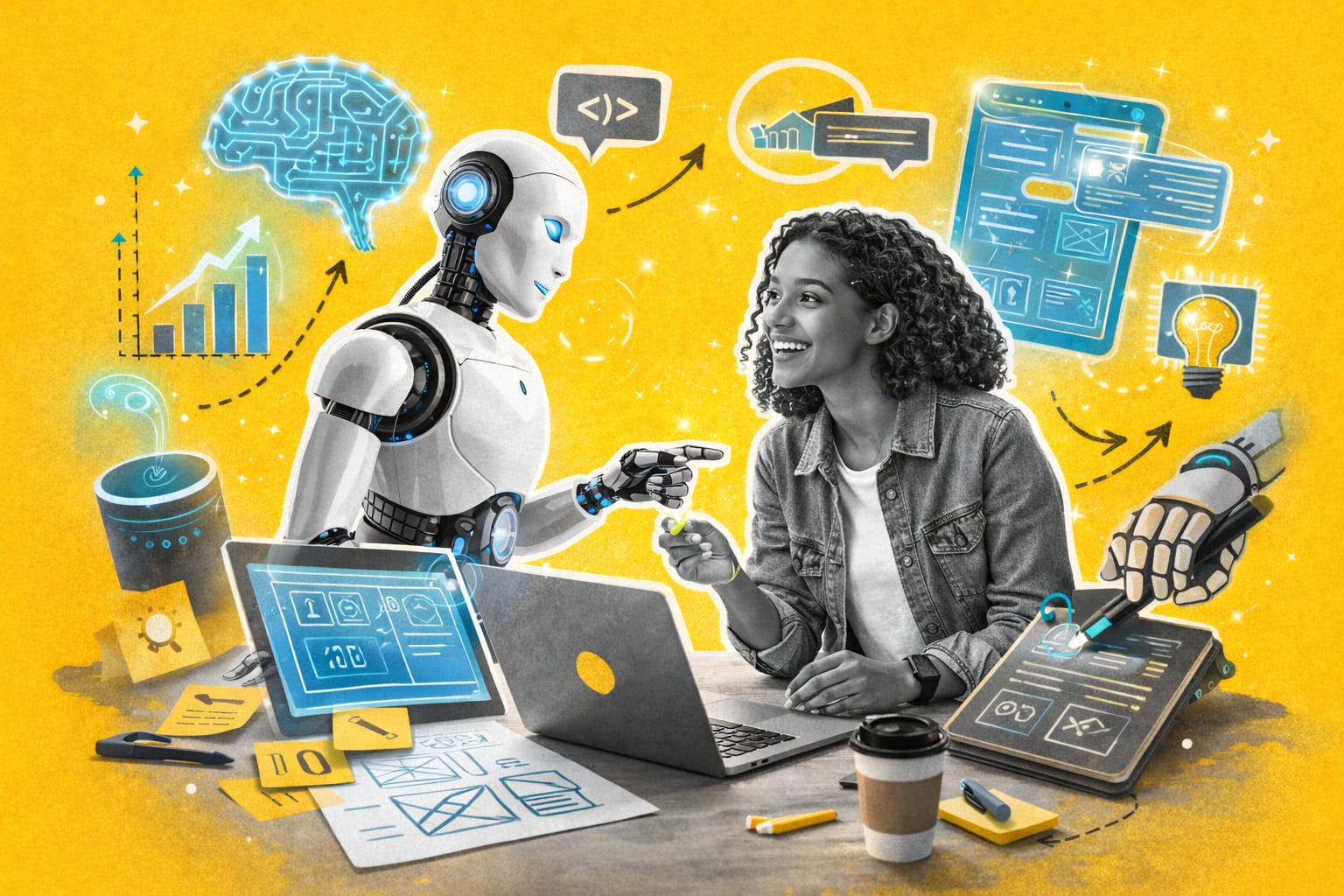
The intersection of artificial intelligence and product design is no longer a futuristic concept; it is the current reality reshaping how digital products are conceived, built, and optimized. At Rethink Lab, we have observed a seismic shift in the design landscape, where AI is evolving from a novelty tool into a fundamental pillar of the creative process. This evolution is creating opportunities we couldn't have imagined five years ago, allowing for a level of efficiency and precision that was previously reserved for science fiction. By integrating AI into the product development lifecycle, agencies and internal teams can move beyond static layouts and toward dynamic, intelligent ecosystems that learn from and adapt to their users.
The stakes for businesses have never been higher. As user expectations pivot toward hyper-personalized, instant, and frictionless experiences, the traditional manual workflows of the past are becoming bottlenecks. To stay competitive, companies must adopt a forward-thinking product strategy that places AI at the core of their design and development DNA.
AI as the New Foundation for Product Strategy
In the traditional product design model, strategy was often limited by the volume of data a human team could analyze and the number of iterations they could produce within a budget. AI has completely dismantled these constraints. Today, the future of AI in product design begins long before a single pixel is moved in Figma. It starts with data synthesis and market analysis.
AI-driven tools can now ingest thousands of user reviews, competitor landing pages, and industry reports to identify gaps in the market. This allows product designers to start with a "warm" brief—one validated by machine learning patterns rather than just gut instinct. For a product design agency, this means we can validate hypotheses in hours rather than weeks.
"AI doesn't just process data; it uncovers the 'missing' pixels in our market understanding—the needs users haven't even articulated yet."
Furthermore, AI is redefining the "Discovery Phase." By using natural language processing (NLP), designers can analyze user interview transcripts at scale, identifying recurring pain points and emotional cues that might be missed by the human ear. This leads to a more robust product discovery process that is deeply rooted in user sentiment. The role of the designer is shifting from "creator" to "curator and strategist," leveraging AI to handle the heavy lifting of data processing while focusing on the high-level vision that drives business success.
| Traditional Strategy | AI-Enhanced Strategy |
|---|---|
| Manual competitor audits (Days/Weeks) | Automated market mapping (Minutes) |
| Intuition-based persona building | Data-backed behavioral archetypes |
| Static product roadmaps | Predictive, adaptive roadmaps |
| Sample-size user testing | Large-scale synthetic & real-user analysis |
The Power of Synthesis
AI's greatest strength in strategy isn't just speed; it's synthesis. It can connect two disparate data points—like a drop in checkout conversion and a rise in social media mentions about shipping costs—to suggest a tactical pivot before the human team even spots the correlation.
Personalization at Scale: The Era of Adaptive Interfaces
One of the most significant shifts we are seeing is the move from "one-size-fits-all" design to hyper-personalization. In the past, personalization was limited to "Hello, [Name]" in an email or basic recommendation engines on e-commerce sites. AI enables products to adapt to individual users in real-time, creating a unique experience for every person who interacts with the interface.
The Rise of Generative UI
Imagine an app that changes its layout based on the user’s dexterity, visual preferences, or even their current cognitive load. This is the promise of Generative UI. Instead of designing a fixed dashboard, designers are now creating "design systems" with variable parameters that an AI can adjust on the fly. This level of sophistication is increasingly becoming a standard part of modern UX/UI design.
- Dynamic Navigation — If the AI notices a user frequently navigates to a specific sub-menu, it can proactively move that element to the primary navigation bar for that specific user.
- Contextual Styling — A fitness app could shift its color palette from energetic oranges in the morning to calming blues in the evening, aligning with the user's circadian rhythm and psychological state.
- Accessibility Auto-Tuning — AI can detect when a user is struggling to read a font or tap a button and automatically increase the contrast or target area, ensuring the product remains inclusive without manual configuration.
Predictive User Journeys
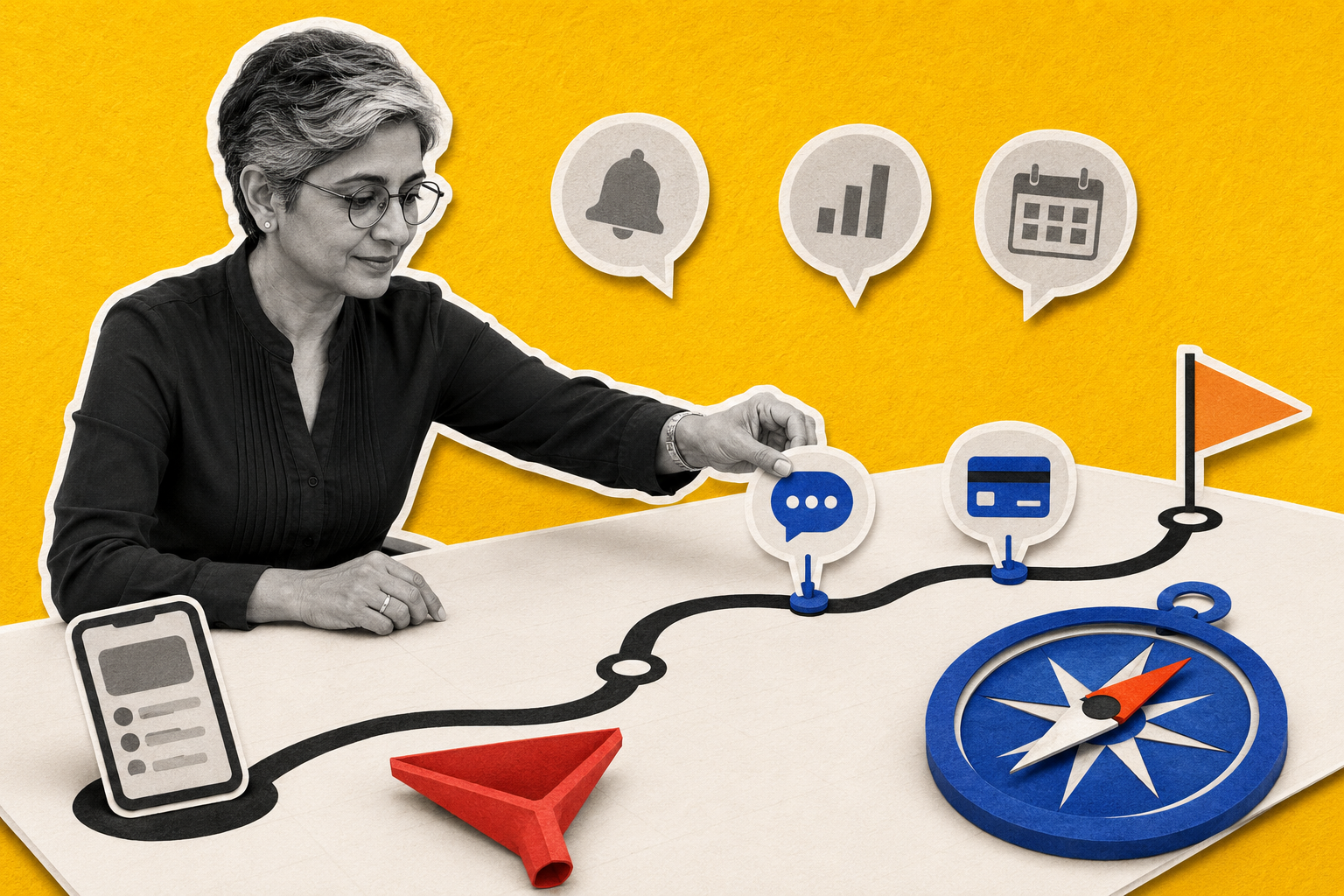
The future of product design lies in anticipation. By using machine learning models, products can predict what a user wants to do next. This reduces "friction," the traditional enemy of conversion. If a user is browsing a real estate app, AI can analyze their behavior to determine if they are a first-time buyer or a professional investor, tailoring the information hierarchy to show mortgage calculators to the former and cap rate data to the latter.
This level of personalization at scale is impossible without the computational power of AI, and it represents the next frontier of competitive advantage in the digital space. For startups, this often requires the guidance of a technical co-founder who understands how to architect these complex data pipelines.
Design Automation: Augmenting Creativity, Not Replacing It
There is a common fear that AI will replace designers. At Rethink Lab, we believe the opposite: tools like Figma's AI features, Midjourney, and GitHub Copilot are augmenting designers and developers, liberating them from the "grunt work" that often bogs down the creative process.
The Automation of Repetitive Tasks
In a typical design project, a significant amount of time is spent on non-creative tasks: resizing images, organizing layers, creating variations of buttons, and documenting design systems. AI is taking over these chores.
- Automated Documentation — AI can now scan a design file and automatically generate the CSS code, accessibility documentation, and usage guidelines, ensuring that dev-handoff is seamless and error-free.
- Iconography and Asset Generation — Instead of spending hours hunting for the perfect icon or stock photo, designers can use generative AI to create custom assets that perfectly match the brand’s aesthetic in seconds.
- Layout Drafting — Wireframing is becoming increasingly automated. Designers can provide a text prompt like "Design a multi-step checkout flow for a luxury watch brand," and AI will generate several structural options to serve as a starting point.
Workflow Optimization
If your team spends more than 20% of their time on file organization and asset management, you are prime for workflow automation. AI can handle the "janitorial" tasks of design, letting your experts focus on the "architectural" ones.
Rapid Prototyping and Iteration
The ability to fail fast is a core tenet of modern product design. AI accelerates this cycle exponentially. With AI-powered prototyping tools, we can generate high-fidelity prototypes from low-fidelity sketches. This allows us to put "real-feeling" products in front of users much earlier in the process.
For instance, we can use AI to generate realistic dummy data for a financial app prototype. Instead of seeing "John Doe" and "Lorem Ipsum," the user sees data that looks and feels like their own, leading to more accurate feedback during usability testing. When the cost of iteration drops to near zero, the quality of the final product inevitably rises because more ideas were explored and discarded. This is why rapid development and AI prototyping have become such critical service offerings in the modern age.
The Evolution of Design Systems in the AI Age
Design systems have become the backbone of modern digital products, ensuring consistency across platforms. However, maintaining a design system is a massive undertaking. AI is turning design systems from static libraries into living, breathing entities.
Self-Healing Design Systems
In the future, design systems will be "self-healing." If a developer uses an outdated color hex code or an incorrect padding value, an AI-powered plugin can automatically flag the discrepancy and suggest the correct component from the library. This maintains the integrity of the product and reduces "design debt," which is the accumulation of inconsistent elements over time. A professional UX audit can often reveal where these inconsistencies are leaking into the live product and hurting conversion rates.
Intelligent Component Creation
Instead of manually building every state of a component (hover, active, disabled, etc.), designers will soon be able to describe the core functionality of a component to an AI, which then generates the entire state-set based on the established brand guidelines. This ensures that even the smallest elements of an interface adhere to the overarching design logic without requiring manual labor.
Semantic Search for Design Assets
As design systems grow to include thousands of components and assets, finding the right one becomes a challenge. AI-driven semantic search allows designers to find assets based on intent rather than just filenames. A designer could search for "a component that lets users select multiple dates for a flight," and the AI will pull up the relevant calendar module, even if it’s named something obscure in the file system.
Transforming the User Experience (UX) Research Process
User research has traditionally been one of the most time-consuming parts of the design process. It involves recruiting participants, conducting interviews, transcribing recordings, and synthesizing the findings into actionable insights. AI is fundamentally changing this workflow, making research more accessible and continuous.
Real-Time Sentiment Analysis
In the past, sentiment analysis was something we did after a product had been in the market for several months. Now, we can integrate AI into the beta testing phase to track user sentiment in real-time. By analyzing the way users interact with a prototype—where they linger, where they click rapidly in frustration (rage-clicking), and what they say in feedback forms—AI can provide a heatmap of emotional engagement.
Synthetic Users and Persona Validation
While nothing replaces talking to real humans, AI-generated "synthetic users" are becoming a valuable tool for early-stage validation. By feeding an AI model the demographic data, pain points, and goals of a specific user persona, designers can "chat" with the persona to pressure-test ideas before investing in expensive user recruitment. This allows for a preliminary round of feedback that can catch obvious flaws in the logic or flow of a product during MVP development.
Global Research at Your Fingertips
AI-powered translation and transcription tools are breaking down geographical barriers. A design team in New York can conduct research in Tokyo or São Paulo, receiving real-time translations and cultural context summaries. This democratizes research and ensures that "global" products are truly informed by a diverse range of perspectives.
Designing for AI: The New UX Challenge
As we integrate AI into our design process, we must also learn how to design for AI. This is a new branch of UX design that focuses on how humans interact with intelligent agents, recommendation engines, and automated systems.
Managing Expectations and Trust
One of the biggest hurdles in AI adoption is trust. If an AI gives a recommendation, the user needs to know why. This is known as "Explainable AI" (XAI). Designers must create interfaces that provide transparency—showing the logic behind an AI’s decision without overwhelming the user with technical data. Designing for trust is just as important as designing for usability.
Handling AI Errors Gracefully
AI is not perfect. It will make mistakes, hallucinate information, or fail to understand a prompt. A key part of the future of product design is creating a "graceful failure" experience. How does the interface apologize? How does it allow the user to correct the AI? These are the new design patterns that will define the next decade of digital products.
- Confirmations — Designing clear "Are you sure?" steps for AI-suggested actions that carry high risk.
- Feedback Loops — Providing easy ways for users to "thumbs up" or "thumbs down" AI outputs, which helps the model learn and improve.
- Human-in-the-Loop — Ensuring there is always a way for a user to speak to a real person if the AI fails to solve their problem.
The Risk of Over-Automation
Excessive automation can lead to "learned helplessness" in users. Designers must find the balance between AI assistance and user agency, ensuring the human remains in the driver's seat.
What This Means for Agencies and Product Teams
As a digital product design and development agency, we see AI as a force multiplier. It doesn't just make us faster; it makes us better. The integration of AI into our workflow allows us to provide a level of service that was previously unattainable for many clients.
Prototyping Faster with AI-Generated Assets
Speed to market is often the deciding factor in a product's success. By leveraging AI automation for asset generation—ranging from 3D models to marketing copy—we can reduce the time from ideation to launch by up to 40%. This efficiency means we can focus our energy on high-value tasks like user psychology, brand positioning, and complex problem-solving.
Testing More Variations with Automated A/B Testing
Traditional A/B testing is often limited by human bandwidth; you can only design and monitor so many versions of a landing page. AI-driven testing platforms can generate and test hundreds of micro-variations simultaneously. These systems analyze which combination of headline, imagery, and button placement performs best for specific demographics, automatically optimizing the interface in real-world environments. This data-driven approach removes the guesswork from web redesign and replaces it with empirical evidence.
| Metric | Manual A/B Testing | AI-Driven A/B Testing |
|---|---|---|
| Variants Tested | 2-5 | 100+ |
| Time to Significance | Weeks | Days |
| Optimization | Static | Real-time / Dynamic |
| Complexity | Low (Single variable) | High (Multivariate) |
Enhanced Collaboration Between Design and Engineering
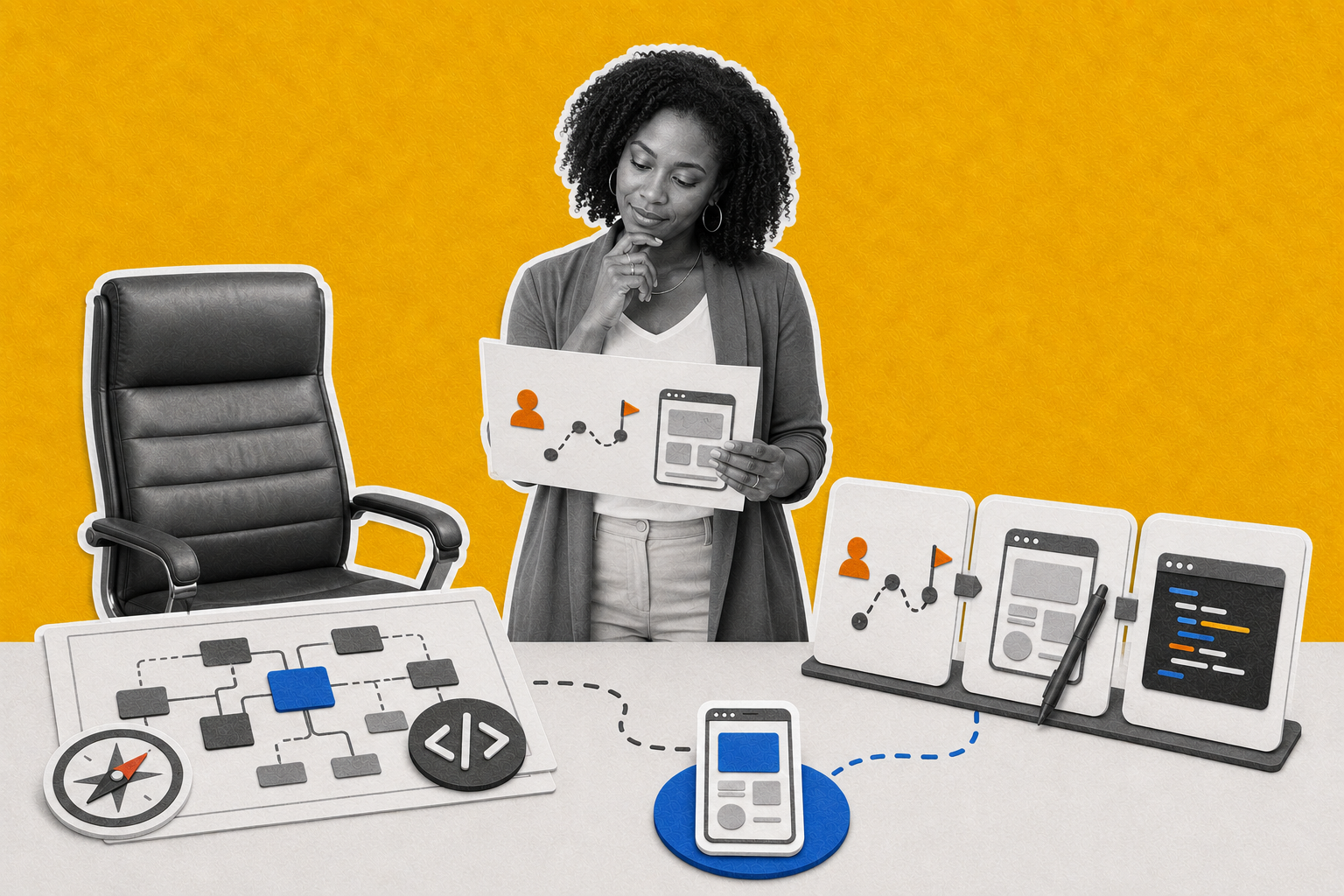
One of the historical friction points in product development has been the "gap" between design and code. AI is acting as a bridge. Large Language Models (LLMs) can now translate design tokens directly into production-ready code for web app development and mobile app development. This ensures that the designer's vision is accurately reflected in the final build, reducing the back-and-forth between departments and accelerating the sprint cycle.
The Human Element: Why Strategy and Empathy Still Matter
Despite the staggering progress of automation, the human element remains the most critical component of product design. As AI handles the "how," humans must remain focused on the "why." Strategy, empathy, and creative vision are skills that AI enhances but cannot replicate.
The Role of Empathy in UX
AI is excellent at recognizing patterns, but it lacks true empathy. It cannot understand the nuanced emotional state of a user who is using a healthcare app to receive difficult news, nor can it replicate the subtle cultural nuances required for a global product launch. Designers must act as the emotional guardians of the user experience, ensuring that products remain human-centric and ethically sound.
Ethical Considerations and Bias
One of the greatest challenges of AI in design is the risk of bias. AI models are trained on existing data, which often contains historical biases. If a design tool is trained on Western design standards, it may inadvertently favor those aesthetics and ignore the needs of a global audience. Humans are needed to audit AI outputs, ensuring that the products we create are inclusive, accessible, and fair. This is a core part of our consulting & mentorship philosophy at Rethink Lab.
Defining the Vision
AI can give you 1,000 versions of a logo or a layout, but it cannot tell you which one aligns with your long-term brand vision or business goals. That requires creative leadership. The product designer of the future is a curator—someone who can look at the vast output of AI and select the one path that solves the user's problem while driving growth.
The Competitive Edge for Businesses
For businesses looking to build the next generation of digital products, the integration of AI is no longer optional—it is a competitive necessity. Companies that embrace AI-driven design will be able to:
- Innovate Faster — Transform ideas into prototypes and prototypes into products in record time.
- Reduce Costs — Automate the repetitive aspects of design and development, allowing for smaller, more efficient teams or specialized IT sourcing solutions.
- Increase Loyalty — Deliver the hyper-personalized experiences that modern consumers expect.
- Make Better Decisions — Rely on data and AI-driven insights rather than subjective opinions.
At Rethink Lab, we are committed to staying at the forefront of this revolution. We don't just use AI because it's the latest trend; we use it because it allows us to build better products for our clients and better experiences for their users. The future of AI in product design is bright, and the possibilities are limited only by our imagination.
The Cost of Inaction
Companies that wait for AI to "mature" before adopting it risk falling into a technical and design debt from which they may never recover. The learning curve is steep; the best time to start was yesterday.
Conclusion: Embracing the AI-Powered Future
The future of AI in product design is not a replacement for human creativity, but a massive expansion of it. We are entering an era where the barriers between idea and execution are thinner than ever. As we have explored, AI is touching every part of the product lifecycle—from the initial strategic research to the final lines of code and the ongoing optimization of the user experience.
For agencies and brands, the goal is not to automate away the human touch, but to use AI to amplify it. By automating the mundane, we free ourselves to tackle the complex. By using data to personalize, we create deeper connections with our users. And by embracing new tools, we ensure that the products we build today are ready for the challenges of tomorrow.
The transition to AI-integrated design requires a shift in mindset. It requires a willingness to experiment, a commitment to ethical standards, and a focus on the human experience above all else. At Rethink Lab, we are excited to lead our clients through this transformation, building the intelligent, empathetic, and high-performing products of the future.
If you are ready to explore how AI can elevate your web design or help you scale a complex digital ecosystem, we are here to help. The landscape is changing fast, and the creators who learn to collaborate with AI today will be the ones who define the digital world of tomorrow.
Ready to rethink your digital presence? Check out our case studies to see how we've helped others or contact us to discuss your next project.