
In the high-stakes world of technology and entrepreneurship, the term "Minimum Viable Product" (MVP) is tossed around in boardrooms and Slack channels with incredible frequency. Yet, despite its ubiquity, it remains one of the most misunderstood concepts in the modern product development lifecycle. For founders, stakeholders, and product managers at a startup, understanding the nuances of an MVP isn’t just about learning Silicon Valley jargon—it is a critical strategic imperative that can determine whether your venture scales to new heights or collapses under the weight of over-engineering. At Rethink Lab, we have seen firsthand how a well-executed MVP serves as the foundation for legendary products, providing the necessary data to pivot or persevere.
Defining the MVP: Beyond the "Bare Minimum"
To truly understand what an MVP is, we must first strip away the misconception that it is simply a "half-baked" or "incomplete" version of a product. An MVP is a development technique in which a new product is introduced in the market with basic features, but enough to get the attention of consumers. The final product is only released into the market after getting sufficient feedback from the product's initial users.
This concept, popularized by Eric Ries in The Lean Startup, is fundamentally about learning. It is the smallest thing you can build that lets you quickly make it through the Build-Measure-Learn feedback loop with the least amount of effort. The "Minimum" refers to the smallest possible feature set, while the "Viable" refers to the product being functional enough to solve a core problem for a specific group of users.
In the context of startup development, an MVP is a process of validation. You are not just building a tool; you are testing a hypothesis. Every startup begins with a series of assumptions:
- Users have a specific problem that causes them significant friction.
- Users are actively looking for a solution to that problem.
- Users are willing to pay for your specific solution or exchange their data for it.
- Your solution is technically feasible and can be built within a reasonable timeframe.
The MVP is the vehicle used to prove or disprove these assumptions before you exhaust your capital and resources. It is the bridge between a visionary idea and a market-proven reality. Without a solid product strategy, an MVP can easily drift into "feature creep" territory, where the product becomes too complex for its own good.
The Golden Rule of MVPs
If you aren't embarrassed by the first version of your product, you shipped too late. — Reid Hoffman, Founder of LinkedIn.
The Core Purposes of MVP Development
Why do the world’s most successful startups start small? Why not build the full vision from day one? The reasons are rooted in risk mitigation and resource optimization.
1. Verification of Market Demand
The biggest risk any startup faces is building something that nobody wants. You might have the most beautiful UI and the most complex backend architecture, but if there is no market pull, the business will fail. An MVP allows you to release a core value proposition into the wild to see if users actually engage with it. This process is tightly linked to product discovery, where you identify exactly what keeps your potential customers up at night.
2. Speed to Market
The tech landscape moves at breakneck speed. If you spend 18 months in "stealth mode" building the perfect platform, a competitor might beat you to market with a simpler version that captures your audience. An MVP enables you to launch in weeks or months rather than years, securing an early foothold in your industry. This is where rapid development practices become a competitive advantage.
3. Cost Efficiency
Development is expensive. By focusing only on the "must-have" features, you preserve your runway. This capital can then be used for marketing, hiring, or pivoting based on the feedback you receive. It prevents the "sunk cost fallacy," where founders feel forced to stick with a failing idea simply because they’ve already spent hundreds of thousands of dollars on it.
4. Focused Value Proposition
When you try to build everything for everyone, you often end up with a cluttered, confusing product. An MVP forces you to identify the single most important problem you are solving. This clarity is often what attracts early adopters who are looking for a specific solution, not a Swiss Army knife of mediocre features.
| Goal | MVP Approach | Full Product Approach |
|---|---|---|
| Release Time | 2-4 Months | 12-18 Months |
| Risk | Low - Validates early | High - Big bet on assumptions |
| Cost | Minimal ($25k-$75k) | Significant ($200k+) |
| Feedback | Immediate loops | Delayed until launch |
Common Myths and Misconceptions About MVPs
To master the MVP process, we must debunk several persistent myths that lead many startups astray.
Myth 1: An MVP is a "Buggy" or "Low Quality" Product
Many people mistake "minimum" for "subpar." This is a dangerous error. While your MVP won't have every feature, the features it does have must work flawlessly. If your core feature is buggy, you aren't testing the market demand; you're just testing people's patience for broken software. Users will forgive a lack of features, but they won't forgive a lack of reliability. This is why a professional UX audit is often necessary even for early-stage products to ensure the core path is friction-free.
Myth 2: An MVP is a One-Time Event
Founders often think, "We will build the MVP, then we will build the real product." In reality, the MVP is the beginning of a continuous cycle. Your product will evolve through dozens of iterations. The MVP is simply the first version of a living entity.
Myth 3: The MVP Must Be a Mobile or Web App
Sometimes, an MVP isn't even code. In the earliest stages, an MVP could be a landing page with a "Waitlist" button, a manual "Concierge" service (where humans do the work the software will eventually do), or even a video demonstrating the concept. In the modern era, ai prototyping has become a popular way to simulate complex functionality without building the full backend.
The Architecture of a Successful MVP: Identifying "Must-Haves"
Building an MVP requires a ruthless prioritization of features. At Rethink Lab, we often use various frameworks to help our clients distinguish between what is essential and what is "fluff."
Identifying the Core User Journey
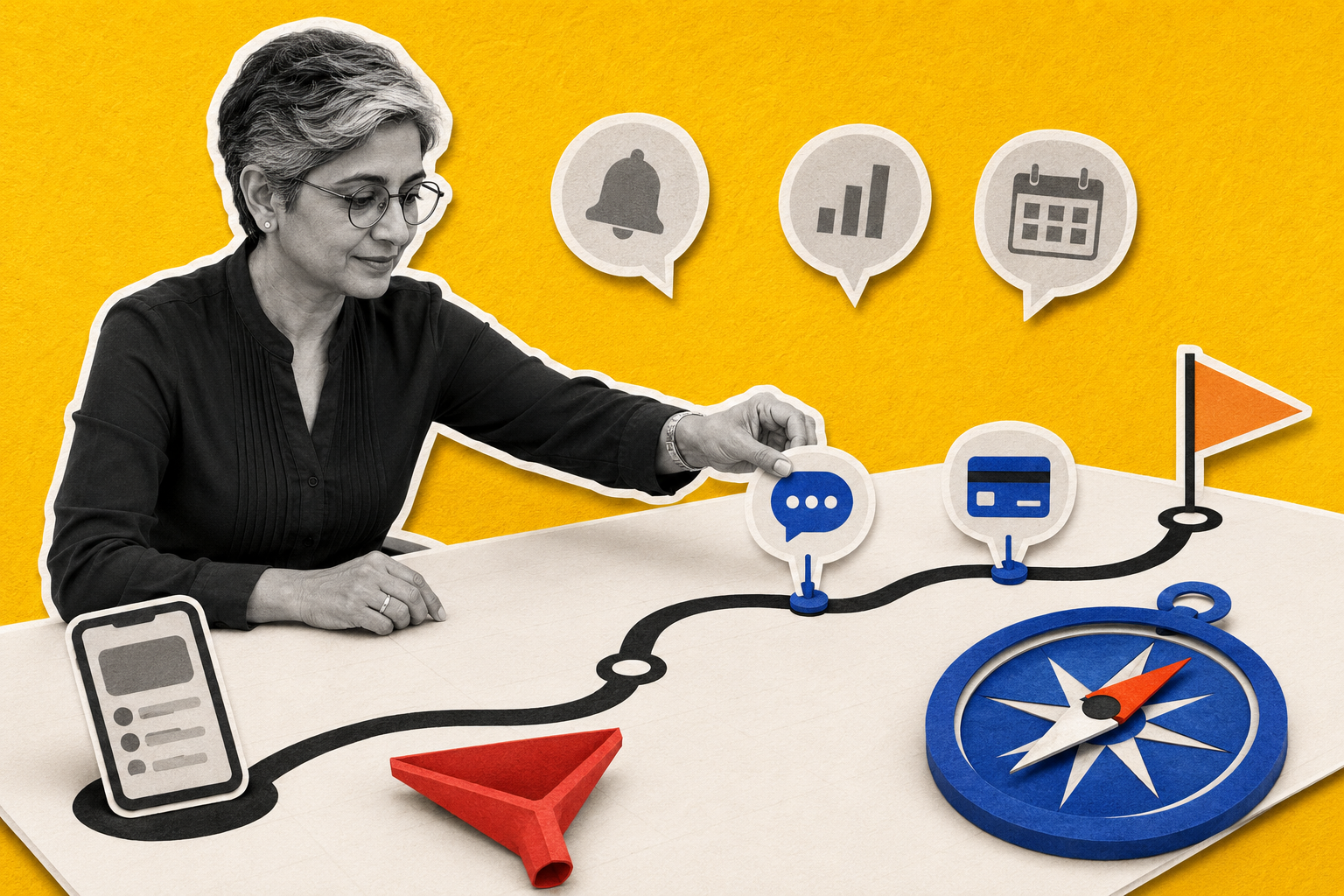
To define the scope of your MVP, you must map out the user journey. Ask yourself: What is the primary action a user needs to take to receive value?
- For an e-commerce app, it’s finding a product and checking out.
- For a messaging app, it’s sending and receiving a text.
- For a ride-sharing app, it’s requesting a ride and getting picked up.
Anything that does not directly support this primary action should be moved to the "Phase 2" backlog. If the interface is confusing, the journey breaks. This is why high-quality UX/UI design is non-negotiable, even at the MVP stage.
Determining Feature Priority (MoSCoW Method)
- Must-have — Non-negotiable features that define the product's existence.
- Should-have — Important but not vital for the initial launch.
- Could-have — Desirable features that can be added if time permits.
- Won't-have — Features explicitly excluded from the current cycle.
The Feedback Loop: Build, Measure, Learn
The MVP is useless without a mechanism for measurement. Before you launch, you must define your Key Performance Indicators (KPIs). These might include:
- User Retention Rate — Are people coming back to use the product again?
- Activation Rate — Do users reach the "Aha!" moment where they realize the value?
- Churn Rate — Why are people leaving, and at what stage of the journey?
- Customer Acquisition Cost (CAC) — How much does it cost to get a user through the door?
Real-World Examples of Legendary MVPs
Looking at history is the best way to understand the power of starting small. Many of today’s tech giants began as incredibly simple versions of themselves.
Dropbox: The Explainer Video
Drew Houston, the founder of Dropbox, knew that building the file-syncing technology was a massive technical challenge. Instead of spending months building a prototype that might not work across all operating systems, he created a 3-minute video demonstrating how the software would work. This video drove hundreds of thousands of people to their landing page, proving the demand existed before a single line of the sync engine was perfected.
Airbnb: The Airbed and Breakfast
The founders of Airbnb didn't start with a global platform. They started by putting an air mattress in their living room and renting it out to attendees of a local design conference because hotels were booked. This manual experiment proved that people were willing to stay in a stranger’s home—the core assumption of their now multi-billion dollar business.
Zappos: The False Door MVP
Nick Swinmurn, the founder of Zappos, didn't start with a warehouse full of shoes. He went to a local mall, took photos of shoes, and put them on a website. When someone bought a pair, he went back to the mall, bought them at retail price, and mailed them out. This "Concierge MVP" proved that people were comfortable buying shoes online without trying them on first.
Instagram (Burbn)
Before it was a photo-sharing behemoth, Instagram was "Burbn," an overly complicated check-in app with gaming elements. The founders noticed users were mostly using the photo-sharing feature and ignoring the rest. They stripped everything else away and pivoted to a simple photo app with filters.
Learning from Failure
Don't be afraid to pivot. Most successful MVPs reveal that the founder's initial idea was slightly off the mark, allowing them to adjust before it was too late.
Step-by-Step Guide to Developing Your MVP
If you are ready to take your idea from concept to reality, follow these strategic steps during the MVP development process.
Step 1: Define the Problem
Start with the "Why." What specific pain point are you solving? If you can’t articulate the problem in one sentence, your MVP will likely be too broad. Avoid the "solution in search of a problem" trap.
Step 2: Identify Your Target Audience
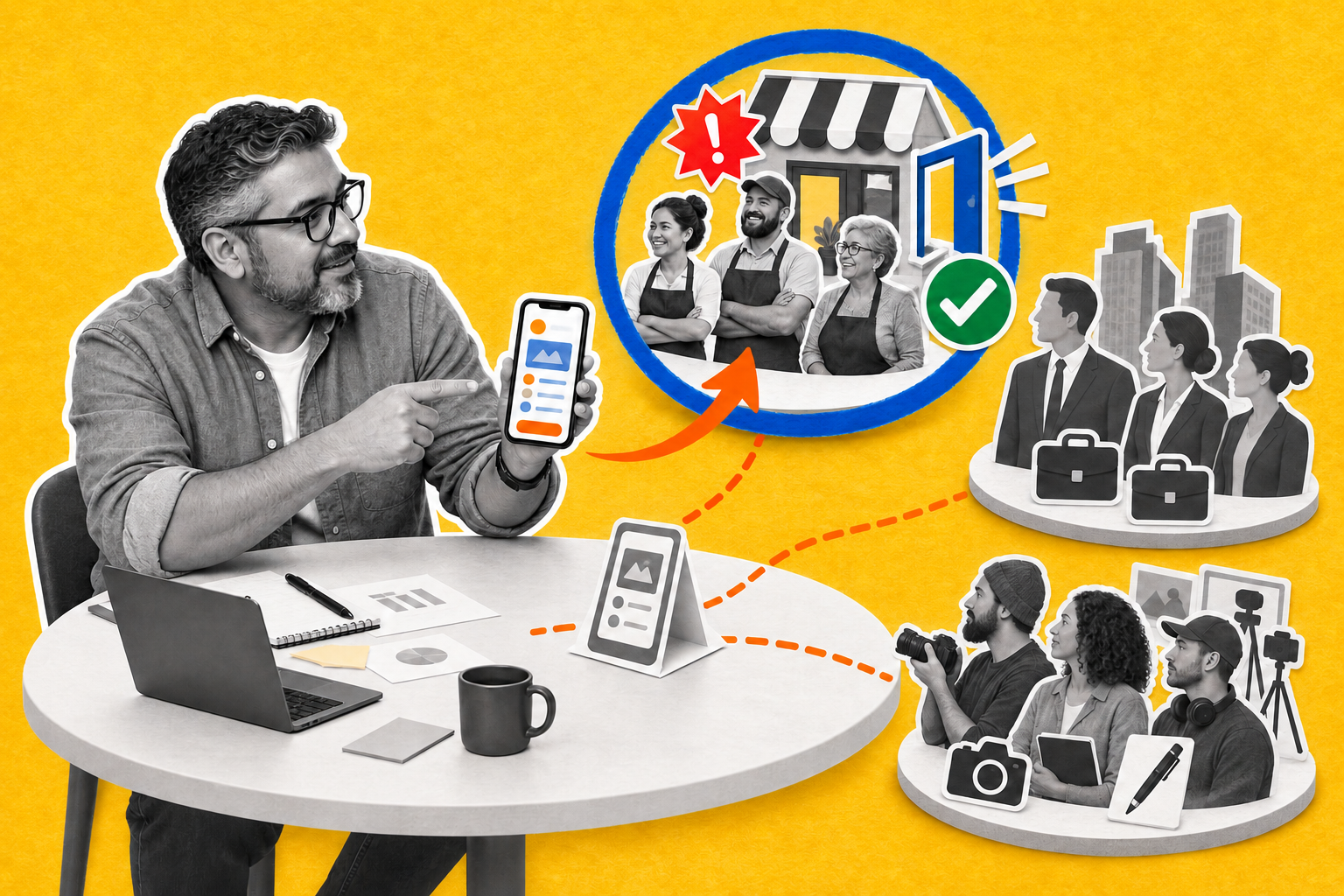
You cannot satisfy everyone. Identify a small "niche" of early adopters who feel the problem most acutely. These users are more likely to provide constructive feedback and tolerate the limitations of an early product. Often, these users are looking for any solution, even an unpolished one, to solve their pain.
Step 3: Conduct Competitor Research
See what is already out there. Your MVP shouldn't just copy competitors; it should offer a unique "hook" or a significantly better experience in one specific area. Analyze their weaknesses—perhaps their web design is dated or their checkout process is cumbersome.
Step 4: Map the User Flow
Define the steps the user takes from landing on your product to achieving their goal. Keep this flow as short as possible. Use wireframes to visualize this process before turning it into code.
Step 5: Prioritize Features
List everything you want your product to do, then remove 80%. Focus on the 20% of features that will deliver 80% of the value. This is where professional consulting & mentorship can be invaluable, offering an objective outside perspective on what is truly essential.
Step 6: Build, Launch, and Iterate
Development should be agile. Once the MVP is live, collect data religiously. Talk to your users. Watch how they use the product using session recording tools. Be prepared to pivot if the data tells you that your initial assumptions were wrong.
Technical Considerations for MVP Development
Choosing the right tech stack is vital for an MVP. You need a setup that allows for rapid iteration without creating massive technical debt. If you lack a technical founder, you might consider CTO as a Service to help make these critical architectural decisions.
- Frontend Frameworks — React or Vue.js are excellent choices for building responsive, fast-loading interfaces that can evolve over time. They have massive communities and plenty of pre-built components.
- Backend Solutions — Consider using Node.js or Python (Django/Flask) for their flexibility and vast libraries of pre-built modules. These are standard for web app development.
- Mobile Considerations — If your product requires a mobile presence, platforms like React Native or Flutter allow for mobile app development that covers both iOS and Android with a single codebase.
- No-Code/Low-Code Tools — For very simple MVPs, tools like Bubble, Webflow, or Zapier can help you launch a proof of concept with minimal engineering time.
- Cloud Infrastructure — Platforms like AWS or Google Cloud offer scalable solutions that grow with you. Use "serverless" options where possible to keep costs low during the low-traffic MVP phase.
The goal is to choose a stack that provides a balance between speed and future scalability. You don't want to build on a platform that you'll have to completely scrap in six months, but you also shouldn't spend weeks optimizing server latency for a million users when you currently have zero.
// Example of a simple feature toggle used in MVP iterations
const featureFlags = {
  betaReporting: true,
  aiSuggestions: false // Feature not ready for MVP
};

if (featureFlags.betaReporting) {
  enableNewReportingModule();
}
The Role of User Experience (UX) in an MVP
While we emphasize "minimum" features, we must never sacrifice "User Experience." A common mistake is thinking UX is just "pretty colors." In an MVP, UX is about clarity and ease of use. If a user can't figure out how to navigate your app, they will leave before they ever experience your value proposition.
Focus on:
- Intuitive Navigation — Can a first-time user find the main action button in 3 seconds?
- Speed — Even an MVP should load quickly. Performance is a feature, and slow load times lead to immediate bounce rates.
- Micro-copy — Use clear, helpful language to guide the user through the process. Avoid technical jargon that might confuse the layperson.
- Accessibility — Ensure your product is usable by everyone, including those with visual or motor impairments.
Many startups choose a web redesign shortly after their MVP launch once they realize their initial UX assumptions didn't match real-world user behavior.
Advanced Strategies: Automation and AI in MVPs
In today’s market, an MVP doesn't have to be purely manual. You can leverage workflow automation to handle backend processes that would otherwise require a full team. For example:
- Lead Management — Automate the collection and sorting of user feedback or sign-ups.
- Customer Support — Use basic AI assistants to answer frequently asked questions.
- Data Analysis — Use ai automation to parse through user behavior data and find patterns that would take a human days to spot.
Integrating these technologies early allows your small team to punch well above its weight class, giving the impression of a much larger, more established organization. Furthermore, using ai prototyping can drastically reduce the time needed to build complex logic flows, allowing you to simulate human-like interactions without a massive development budget.
The Peril of Perfect Automation
Don't automate a process until you have done it manually. You need to understand the "happy path" and the "edge cases" of a workflow before you commit it to an automated script.
Transitioning from MVP to Full-Scale Product
Once your MVP has gained traction and you have validated your core assumptions, the question becomes: what now? The transition from an MVP to a mature product is a delicate phase that requires a shift in mindset from "discovery" to "scaling."
- Address Technical Debt — In the rush to launch, you likely took some shortcuts in the code. Now is the time to refactor and ensure your architecture is sustainable for high traffic.
- Incremental Feature Rollout — Don't dump twenty new features at once. Add them one by one based on user demand and data.
- Scaling the Team — As the product grows, you’ll need more specialized talent. If hiring in-house is too slow, many startups use IT outsourcing to scale their engineering capacity quickly.
- Monetization — If your MVP was free to test the market, this is the phase where you implement your business model and start generating revenue.
- Infrastructure Hardening — Move from a single-server setup to a distributed, load-balanced architecture to ensure 99.9% uptime.
Why Startups Fail at the MVP Stage
Understanding the pitfalls can help you avoid becoming a statistic. Most startups fail not because they couldn't build the product, but because they built the wrong product or managed the MVP process poorly.
Over-Engineering
Adding "just one more feature" before launch is a trap. This leads to "scope creep," pushing back your launch date and draining your budget. Every week you spend in development is a week you aren't getting feedback from the market. This is why rapid development frameworks are so essential—they keep the team focused on speed.
Ignoring Negative Feedback
Founders are often deeply in love with their ideas. When users provide negative feedback, it’s tempting to dismiss them as "not the target audience." However, negative feedback is the most valuable data you can receive. It tells you exactly where the friction is. If ten people say they can't find the "buy" button, it's not their fault—it's yours.
Lack of Analytics
Launching an MVP without analytics is like driving a car with a blacked-out windshield. You might be moving, but you have no idea where you are going. You must have tools like Google Analytics, Mixpanel, or Hotjar installed from day one. You need to know not just that people are leaving, but where they are leaving.
Failing to Iterate
An MVP is not a "set it and forget it" project. If you launch and then stop developing while you "wait for users," you will lose momentum. You should be prepared to push updates weekly or even daily based on what you see in the data.
Budgeting for Your MVP
One of the most common questions we receive is, "How much does an MVP cost?" The answer, of course, varies based on complexity, but there are some general tiers to consider:
| Tier | Average Cost | Best For |
|---|---|---|
| Proof of Concept | $5k - $15k | Clickable prototypes, pitching to investors. |
| Standard MVP | $25k - $75k | Core functional app with polished UX for initial users. |
| Complex MVP | $100k+ | AI-heavy platforms or strictly regulated industries. |
For a clearer picture of development costs, you can view our pricing page to see how we structure our engagements. We believe in transparency, ensuring that founders know exactly what they are getting for their investment.
How Rethink Lab Can Help You Navigate the MVP Journey
At Rethink Lab, we don't just build software; we build businesses. We understand that an MVP is a strategic tool designed to minimize risk and maximize learning. Our team of expert designers and developers specializes in helping startups identify their core value, prioritize their feature sets, and build high-quality initial versions that resonate with users.
Through our specialized services, we provide:
- Strategic Product Discovery — Working with you to refine your vision and identify market opportunities before a single line of code is written.
- Rapid Prototyping — Bringing your ideas to life quickly so you can start testing assumptions with real stakeholders.
- Scalable Architecture — Building on a foundation that allows for growth without constant total rewrites.
- User-Centric Design — Ensuring that even the most basic version of your product provides an exceptional user experience that builds brand loyalty.
- Continuous Mentorship — We don't just hand over the code; we help you interpret the data and decide on your next move via consulting & mentorship.
Whether you are a solo founder with a groundbreaking idea or a corporate innovation team looking to launch a new venture, our process is designed to get you to market faster and smarter. We take the technical burden off your shoulders so you can focus on what matters most: growing your business and talking to your customers.
The Long-Term Vision: Growing Beyond the MVP
Successful founders use the MVP phase to build more than a product—they build a community. Early adopters are your most loyal advocates. By involving them in the development process, you create a sense of ownership among your user base. This "community-led growth" is often more sustainable than paid advertising.
As your product moves into the scaling phase, you may find that your internal processes need to evolve as much as your code. Implementing workflow automation internally can help your team manage the influx of new users without burning out.
Ultimately, the MVP is the first chapter of a much larger story. Every billion-dollar company once had a version 1.0 that was simple, focused, and iterative. Your job is to make sure your 1.0 is the best possible foundation for what’s to come.
Conclusion
The Minimum Viable Product is much more than a development milestone; it is a philosophy of validated learning. By embracing the MVP approach, you protect your startup from the most common causes of failure: building a product nobody wants, overspending on unnecessary features, and taking too long to reach the market.
In the fast-moving digital economy, the only way to win is to learn faster than your competition. Your MVP is the instrument of that learning. It allows you to enter the market with humility, ready to listen to what your users actually need, rather than what you think they need.
Remember that perfection is the enemy of progress. The goal of your MVP is not to be perfect; it is to be useful. It is to start a conversation with your customers that will guide the future of your company. By focusing on the core problem, prioritizing the user journey, and listening to the data, you can turn a simple MVP into a transformative industry leader.
If you’re ready to stop guessing and start building, now is the time to define your MVP scope. Focus on the value, ignore the noise, and prepare for the iterative journey ahead. The road to a successful product begins with a single, well-executed step.
Launch your vision today with a partner who understands the intricacies of the startup ecosystem. Explore our portfolio to see how we have helped other founders succeed, or contact us to start a conversation about your project. Your journey from idea to market-ready product starts here.